

Table of Contents
- Why High Quality Basics Build a Resilient Wardrobe
- How to Shop for Quality Basics: The 5-Point Checklist
- Best Brands for Wardrobe Basics: What to Look For
- Wardrobe Essentials for Women: Fit, Fabric, and Function
- Capsule Wardrobe Basics: Mix, Match, and Repeat Wear
- Cost Per Wear: The Math That Separates Value from Price
- Care, Repair, and Making a Resilient Wardrobe Last
- Frequently Asked Questions
Last Updated: October 8, 2026
Why High Quality Basics Build a Resilient Wardrobe
Most closets fail for the same reason: too many cheap pieces, too few good ones.
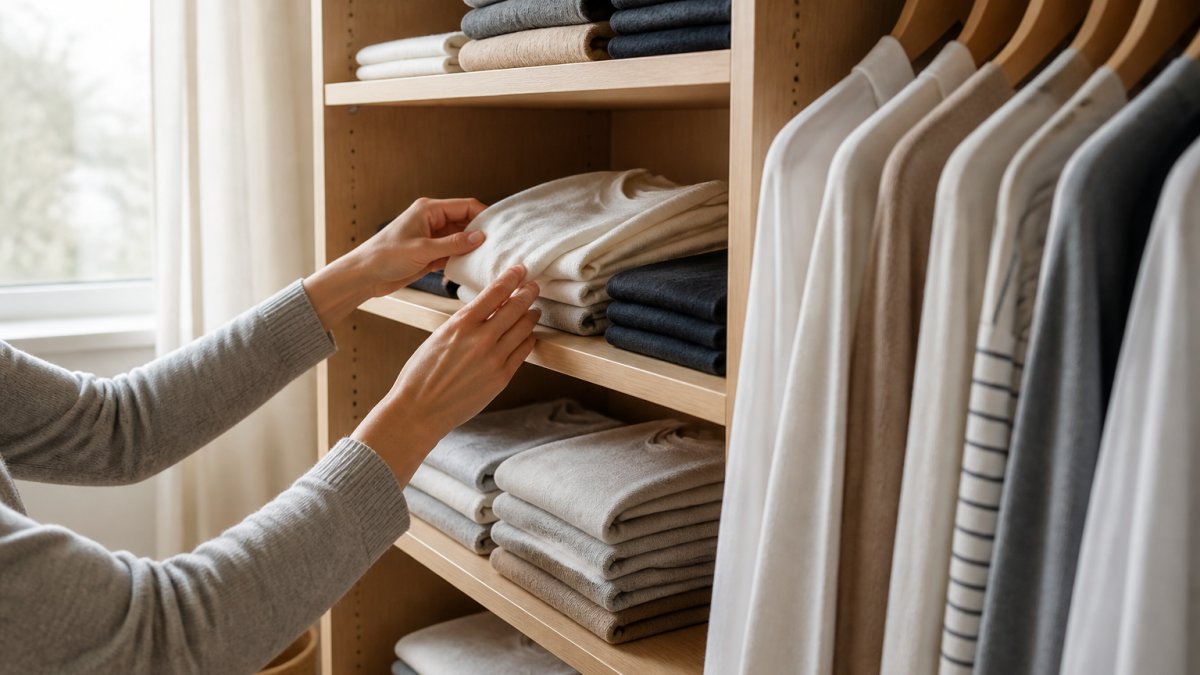
A resilient wardrobe is a curated collection of durable, versatile garments that can be mixed, layered, and worn repeatedly across seasons without losing shape, color, or fit.
Most shopping guides rank garments by brand name or trend appeal, not by the details that predict longevity.
How to Shop for Quality Basics: The 5-Point Checklist
Quality shopping comes down to five observable checks:
- Fiber content: Look for natural fibers like cotton, wool, or linen, or considered blends with a clear purpose.
- Fabric weight: Heavier knits resist pilling and hold shape; flimsy fabric shows wear fast.
- Stitching: Even, tight seams with no loose threads or skipped stitches.
- Hardware: Zippers, buttons, and snaps should feel solid, not flimsy.
- Fit at the shoulders: If the shoulder seam doesn't sit where your shoulder ends, the garment will never drape right.
Fabric Weight and Fiber Content
Fabric weight is measured in ounces per square yard for knits. A heavier knit, generally above 6 oz/yd², resists pilling and holds shape through repeated washing; lighter knits stretch out and thin faster.
Fiber content matters just as much. Combed ring-spun cotton produces a smoother, stronger yarn than standard cotton because short fibers are removed before spinning. Polyester blends add durability or wrinkle resistance, but too much synthetic content in a knit can cause pilling.
Stitching, Seams, and Hardware
Check the seams first. A reinforced neckline with ribbed binding resists stretching, while double-needle hems and shoulder-to-shoulder taping add structure that survives repeated wear.
Hardware is the easiest quality test. A zipper with an auto-lock slider stays put instead of sliding down mid-wear, and metal snaps and buttons outlast plastic ones by a wide margin.
Best Brands for Wardrobe Basics: What to Look For
The best wardrobe basics brands share three traits: transparent material specs, consistent sizing, and construction details you can verify before purchase. Skip brands that hide fiber content or rely on vague words like "premium" without numbers.
The Brand Scorecard: Six Questions to Ask Before You Buy
Run any brand through these six questions. Four or more clear answers is worth a first order; three or more dodges is a pass.
- Does it publish fiber content and fabric weight? "100% combed ring-spun cotton, 7 oz/yd²" is an answer. "Premium cotton blend" is not.
- Does it publish a real size chart with body measurements, not just garment measurements? Body measurements let you match your own numbers; garment measurements only tell you how the item was cut.
- Does it state a return window and a restocking policy in plain language? A brand confident in its fit makes returns easy.
- Does it show the garment on more than one body type? A single model in a single size tells you almost nothing about how the piece will drape on you.
- Does it name its mill, factory, or country of manufacture? You do not need a famous mill, but a brand that names its supply chain is usually a brand that stands behind it.
- Does it sell the same core style year after year? A tee that is still in the catalog three years from now is a tee the brand believes in. A style that disappears every season is a trend bet, not a basic.
Reading the Spec Sheet Like a Buyer
Once a brand passes the scorecard, compare the actual specs:
| What to Check | Weak Signal | Strong Signal |
|---|---|---|
| Fiber content | "Premium cotton" | "100% combed ring-spun cotton" |
| Fabric weight | Not listed | Listed in oz/yd² or g/m² |
| Neckline | Plain seam | Ribbed, reinforced collar |
| Hem | Single stitch | Double-needle stitch |
| Label | Sewn-in | Tear-away |
| Shoulder seam | Set-in, no tape | Shoulder-to-shoulder taped |
| Side seams | None (tubular body) | Cut and sewn with side seams |
That last row matters more than most shoppers realize. A tubular body, knit as a continuous tube with no side seams, is cheaper to make but twists after washing and cannot be tailored. A cut-and-sewn body with side seams holds its shape and can be taken in at the waist. For a resilient wardrobe, side seams are the better long-term bet.
Where to Actually Shop
There is no single best store, but three reliable categories:
- Direct-to-consumer basics brands: Publish detailed specs, sell a narrow range, and price between fast fashion and designer. Trade-off: limited size range and few physical stores to try before buying.
- Heritage workwear and outdoor brands: Built for durability, often with repair programs and lifetime guarantees. Trade-off: boxier fits and higher prices.
- Mass retailers with a premium sub-line: Easy to try on in person and return. Trade-off: specs are often vague, and the same style can change construction between production runs.
When we built the Start4rmStart basics line, we started with the specs. The S4S Men's box tee uses 100% combed ring-spun cotton at 7 oz/yd², with a ribbed collar reinforced neckline and drop shoulder sleeves, a heavier knit than most graphic tees, which is why it holds shape after washing. The S4S Lady's T-Shirt uses 100% airlume combed and ring-spun cotton with a tapered waist, and runs true to size.

Federal Trade Commission guidance on textile fiber content and care labeling
Wardrobe Essentials for Women: Fit, Fabric, and Function
The core wardrobe essentials for women come down to a fitted tee, a relaxed tee, a long-sleeve layer, a structured jacket or blazer, well-fitted trousers, denim, and one dress that works for multiple occasions.
Fit does more work than fabric here. A tee that fits at the shoulders and skims the waist reads more polished than an expensive one that pulls at the bust.
Fabric matters most for the pieces you wear closest to your skin. Cotton breathes; polyester traps heat. For layering pieces, a cotton-poly blend can add structure without sacrificing comfort.
Capsule Wardrobe Basics: Mix, Match, and Repeat Wear
A capsule wardrobe basics approach means limiting your closet to a defined set of versatile pieces that all work together. Most capsules run 20 to 40 items, including shoes and outerwear.
Resilience Is Adaptability, Not Minimalism
A resilient wardrobe is not the smallest wardrobe. It is the wardrobe that keeps working when your life changes, a new job with a dress code, a move to a colder climate, a season of travel, a body that shifts a size. The test of a capsule is not how few pieces it holds, but how many still earn their place after a year.
Three properties make a piece resilient:
- Repeat wear: You reach for it at least once a week in its season. If it sits for a month, it is not a basic for you, no matter how good it looks on the hanger.
- Layering range: It works alone in mild weather and under a layer in cold weather. A tee that only works in July is a seasonal item, not a basic.
- Replaceability: You can buy the same piece again, or repair the one you own, when it wears out. A discontinued style is a dead end.
A Starting Framework by Category
These counts are a starting point, not a rule. Adjust them to your climate, laundry schedule, and how often you dress for work versus weekends.
- Tops: 6 to 8 tees and long-sleeve shirts in neutral and one accent color
- Bottoms: 3 to 4 pairs of trousers or denim
- Layers: 2 to 3 sweatshirts, hoodies, or cardigans
If you do laundry once a week, six to eight tops is roughly the minimum for a clean top every day. If you work from home, cut that number and add a layer instead. The count should follow your life, not the other way around.
The Three-Item Rule and the One-In-One-Out Rule
Two rules keep a capsule from quietly turning back into a full closet:
- The three-item rule: Every piece should work with at least three others. If it does not, it does not belong in the capsule.
- One in, one out: When you add a new basic, remove the weakest piece in the same category. This keeps the total stable and forces you to judge whether the new item is genuinely better than what you already own.
Climate and Lifestyle Adjustments
A capsule built for a mild four-season climate looks different from one built for hot, humid or cold, dry conditions. The pieces change less than the weights and layers do:
- Hot and humid: Favor lighter knits, linen blends, and looser cuts. Fewer layers, more breathable tops.
- Cold and dry: Favor heavier knits, wool layers, and one substantial outer layer. More layering pieces, fewer standalone tops.
- Mixed or transitional: Favor mid-weight knits and pieces that work both alone and under a layer. This is where the three-item rule earns its keep.
Cost Per Wear: The Math That Separates Value from Price
Cost per wear is the purchase price divided by the number of times you actually wear the garment.
A $34 tee worn 100 times costs $0.34 per wear. A $10 tee worn five times before it pills costs $2.00 per wear, six times more.
Run the math before you buy:
- Estimate the price.
- Estimate how many wears you'll realistically get.
- Divide price by wears.
- Compare across options, not just across price tags.
A resilient wardrobe is built on low cost per wear, not low sticker price. The most expensive garment in your closet is the one you never wear.
Care, Repair, and Making a Resilient Wardrobe Last
Longevity comes down to three habits: wash less, dry flat or low, and repair before you replace. Most garments fail because of how they're washed, not how they were made.
- Wash cold, inside out: Heat breaks down cotton fibers and fades prints. Cold water and a gentle cycle extend garment life significantly.
- Skip the dryer when you can: High heat shrinks cotton and weakens elastic. Air-drying preserves fit.
- Repair small issues early: A loose seam or missing button is a five-minute fix that prevents a larger failure.
A resilient wardrobe is a maintained wardrobe. The pieces that last decades aren't the ones that never get worn. They're the ones that get worn, cared for, and repaired.
Building a resilient wardrobe takes discipline: resisting the urge to buy five cheap tees when one good one would serve you better for years. Our S4S Men's box tee, S4S Lady's T-Shirt, and Premium full zip hoodie are built with the fabric weight, reinforced construction, and fit that hold up to daily wear.

Frequently Asked Questions
What basics should every wardrobe have?
A resilient wardrobe starts with versatile pieces you can wear multiple ways. Core items include a well-fitted t-shirt, a quality long-sleeve top, a crewneck sweatshirt, a zip hoodie, and a tank for layering. Each piece should work across at least three outfit combinations. Start4rmStart's collection covers these categories with fabrics ranging from 4.3 oz to 8.3 oz, giving you options for different seasons and layering needs.
How can you tell if clothing is high quality?
Check three things: fabric weight, construction details, and fiber content. A 7 oz combed ring-spun cotton tee holds its shape better than a thin 4 oz alternative. Look for reinforced necklines, double-needle hems, and tear-away labels. Natural fibers like 100% cotton breathe well and resist pilling. Start4rmStart's Men's Box Tee uses 100% combed ring-spun cotton at 7 oz with a ribbed collar reinforced neckline, a combination that signals durability.
How do you build a capsule wardrobe that lasts?
Start with neutral-colored basics you can mix and match. Choose pieces with higher fabric weights and reinforced construction so they survive repeated washing. Aim for 20-30 items total, focusing on versatile pieces like tees, sweatshirts, and hoodies that transition across seasons. Track cost per wear: a $34 tee worn 100 times costs $0.34 per wear, while a $10 tee worn five times costs $2 per wear. Durability wins.
What is the 5-4-3-2-1 method of wardrobe planning?
This method suggests owning 5 tops, 4 bottoms, 3 dresses or outerwear pieces, 2 pairs of shoes, and 1 accessory that all coordinate. The goal is maximizing outfit combinations from a small set. When selecting basics for this framework, prioritize high-quality fabrics and construction so each piece lasts through frequent wear. A resilient wardrobe built this way reduces decision fatigue and keeps spending focused on pieces that earn their place.
How many basics do you need in a wardrobe?
Most people function well with 10-15 core basics: 4-5 t-shirts, 2-3 long-sleeve tops, 2 sweatshirts or hoodies, 1-2 tanks for layering, and 1-2 versatile layering pieces. The exact number depends on your climate and how often you do laundry. Focus on repeat wear and outfit combinations rather than hitting a specific count. Quality matters more than quantity when building a resilient wardrobe.