

Table of Contents
- How Clothing Impacts Your Mindset and Motivation
- Understanding Enclothed Cognition and Goal Attainment
- How to Dress for Success and Maintain Your Performance Mindset
- Building a Capsule Wardrobe with Motivational Apparel
- Step-by-Step: Creating Your Intent-Based Dressing Routine
- Overcoming Sensory-Friendly Motivation and Workout Fatigue
- Common Mistakes That Kill Your Momentum
- Frequently Asked Questions
Last Updated: October 3, 2026
How Clothing Impacts Your Mindset and Motivation
What you wear signals to your brain who you are and what you're capable of, making clothing motivation goals essential for sustained performance. Intentional activewear primes your mind for performance.
Clothing motivation goals is a practical tool for staying on track. The right apparel becomes a daily reminder that you're someone who shows up and pushes through.
Understanding Enclothed Cognition and Goal Attainment
Enclothed cognition is the psychological phenomenon where clothes directly influence cognitive performance and behavior.
Activewear shifts your brain into a performance mindset. Fit, material, and design signal your nervous system that it's time to execute.
The science is straightforward:
- Clothes send signals to your brain about your identity
- Your brain then adjusts your behavior to match that identity
- Consistent behavior over time builds real momentum toward your goals
How to Dress for Success and Maintain Your Performance Mindset
Dressing for success means selecting apparel that reinforces your commitment to your goals, using clothing as a behavioral anchor between who you are and who you're becoming.
Identity-congruent behavior means clothing that matches your self-image triggers aligned choices. A person in athletic gear is more likely to take stairs and choose movement-based activities because the visual cue activates that identity.
Choose pieces that match your goal context. Fitness requires compression support and breathable material; professional work requires competence and intentionality; creative work signals permission to experiment.
Color Psychology in Your Activewear Choices
Red activates the sympathetic nervous system, ideal for high-intensity workouts and competitive activities when you need energy and assertiveness.
Blue promotes calm focus and trust, optimal for endurance activities and recovery days requiring sustained attention.
Black and deep neutrals convey authority and strength, ideal for high-intensity workouts when you need to feel powerful.
Bright colors increase alertness and optimism for morning workouts, but can overstimulate during evening sessions.
Select 2-3 key pieces in colors matching your most common goal states: darker shades for grounded focus, brighter shades for energy boosts.
The Transition Outfit Strategy for Mental Momentum
A transition outfit signals your brain you're shifting into a new mode, from work to workout, sleep to morning routine. It reduces friction between intention and action.
The transition outfit removes decision fatigue at the moment you're most vulnerable to skipping your goal activity, compounding into real behavioral change.
A dedicated transition outfit creates a psychological boundary.
Building a Capsule Wardrobe with Motivational Apparel
A capsule wardrobe is a curated collection of activewear and everyday pieces that reinforce your performance mindset.
Include high-quality activewear, intentional everyday pieces, transition pieces, and accessories that reinforce your personal brand. This eliminates decision fatigue and makes getting dressed a moment of reinforcement.
Start4rmStart's S4S Leggings ($40.00), S4S Sports Bra ($30.00), and S4S Biker Shorts ($35.00) are designed to work together as part of this intentional wardrobe. Each piece is built for performance and durability, so you can trust them to support you through your journey.

Step-by-Step: Creating Your Intent-Based Dressing Routine
Building a dressing routine that supports your goals takes intention and consistency. Here's how to create one that works.
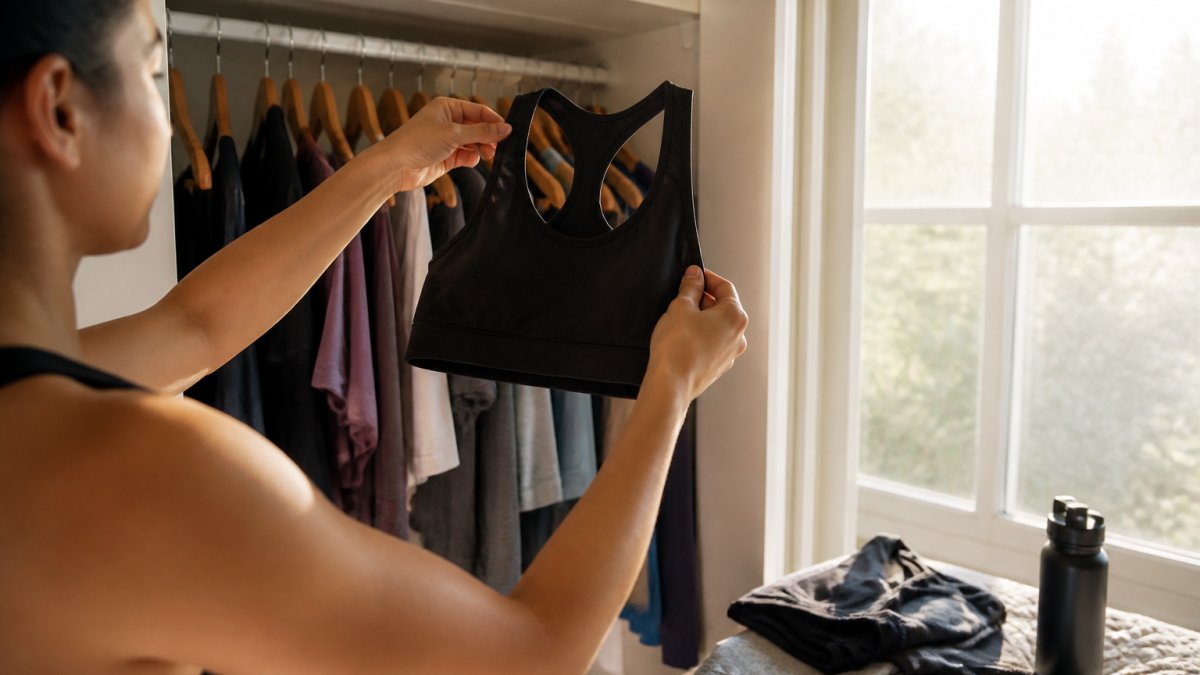
Step 1: Identify Your Goals and Personal Brand
Identify your primary goal, three words describing the person achieving it, and one specific outcome. Your clothing should reflect these elements.
Step 2: Select Pieces That Trigger Your Performance Mindset
Choose pieces with fit that supports movement, materials that feel good, colors matching your mental state, and design details reinforcing commitment. The S4S Sports Bra, S4S Leggings, and S4S Biker Shorts offer compression support and durable recycled polyester.

Step 3: Use Daily Reminders to Reinforce Your Self-Image
Include a moment of intention when getting dressed: take three deep breaths, say one affirmation, notice how clothes feel, or visualize success. This 30-second ritual compounds into real behavioral change.
Step 4: Track Your Workout Adherence and Habit Formation
Track when you wear intentional apparel and whether you completed your intended activity. After two weeks, review the pattern. Intentional apparel increases workout adherence by creating a mental trigger.
Overcoming Sensory-Friendly Motivation and Workout Fatigue
Fatigue is a cascade of physical, cognitive, and sensory signals. Removing sensory friction through sensory-friendly apparel extends your actual capacity to perform.
How Sensory Regulation Impacts Motivation
Sensory load, negative signals from fabric, waistband pressure, temperature, and weight distribution, depletes mental energy faster. Uncomfortable activewear causes exhaustion 10-15 minutes earlier because your brain processes competing signals instead of executing your goal.
Sensory-friendly apparel removes this competing load. When your clothes work with your body instead of against it, you preserve mental energy for your actual goal. This is especially critical on days when motivation is already low or when you're building a new habit.
The Specific Sensory Elements That Matter
Seam placement and construction: Seams that run across high-friction areas (underarms, inner thighs, under the bust) create constant micro-irritation. Your nervous system registers this as a threat signal, triggering low-level stress responses.
Fabric weight and stretch recovery: Fabric that's too heavy creates constant pressure signals. Fabric that doesn't recover from stretch creates a sagging sensation that triggers discomfort.
Waistband design: A waistband that digs in or rolls creates a constant pressure point that your nervous system monitors.
Moisture management: Sweat accumulation creates a cold, heavy sensation that triggers discomfort and temperature dysregulation. Fabric that wicks moisture away from your skin (rather than absorbing it) keeps your sensory experience consistent throughout your workout.
Strap and support design: Straps that dig into shoulders or shift during movement create constant micro-adjustments. Your brain has to monitor and correct these shifts, consuming mental energy.
Building Your Sensory Profile
Not everyone's sensory preferences are the same. Some people are sensory-sensitive and need minimal seams and soft fabrics. Others prefer more compression and structure. The key is identifying your sensory profile so you can choose apparel that matches your nervous system's needs.
Ask yourself:
- Do seams bother you, or do you not notice them?
- Do you prefer compression or freedom of movement?
- Do you like your waistband to be wide and soft, or narrow and firm?
- Do you prefer moisture-wicking or moisture-absorbing fabrics?
- Do you like straps that are snug or loose?
Your answers determine which apparel features will actually support your motivation. Choosing activewear that contradicts your sensory profile is like choosing shoes that don't fit, you'll resist wearing them, and you'll blame yourself for lacking motivation when the real issue is sensory mismatch.
The Fatigue-Sensory Connection
When you're fatigued, every small friction point becomes a reason to quit. Your brain is already signaling exhaustion, and sensory discomfort amplifies that signal. Remove those friction points through thoughtful apparel choices, and you remove the excuse your brain uses to justify quitting.
This is why sensory-friendly apparel is especially critical during the first 30 days of building a new habit. Your motivation is fragile, and your nervous system is hypersensitive to discomfort. Removing sensory barriers during this critical window can increase adherence. Once the habit is established, your brain becomes more resilient to minor discomfort, but by then, you've already built the momentum that carries you forward.
The practical takeaway: invest in sensory-friendly apparel during habit formation. Once you've built consistency, you have more flexibility. But during the vulnerable early phase, sensory comfort is not a luxury, it's a tool for success.
Common Mistakes That Kill Your Momentum
Most people make the same mistakes when trying to use clothing as a motivation tool. Here's what to avoid.
Mistake 1: Choosing clothes for how they look instead of how they feel. Your activewear is not a fashion statement. It's a tool.
Mistake 2: Keeping clothes that don't align with your current goals. Old clothes from old versions of yourself create cognitive dissonance.
Mistake 3: Treating your dressing routine as optional. Consistency is everything. If you only wear intentional apparel on good days, you lose the psychological benefit.
Mistake 4: Ignoring the sensory experience. If your clothes cause irritation, restriction, or discomfort, your brain will resist wearing them.
Mistake 5: Expecting instant results. Clothing motivation works through repetition. Give yourself at least 30 days of consistent practice before evaluating whether it's working.
| Mistake | Impact | Fix |
|---|---|---|
| Choosing for looks over feel | Discomfort kills adherence | Prioritize comfort and fit |
| Keeping misaligned clothes | Cognitive confusion about identity | Curate your wardrobe intentionally |
| Inconsistent practice | No psychological reinforcement | Wear intentional apparel daily |
| Ignoring sensory comfort | Resistance and avoidance | Choose high-quality, comfortable pieces |
| Expecting instant change | Disappointment and quitting | Commit to 30 days minimum |
The journey from where you are to where you want to be requires daily reinforcement. Your clothing is one of the most accessible tools you have.
Frequently Asked Questions
How does enclothed cognition actually work to keep me motivated on my goals?
Enclothed cognition is the psychological effect where wearing specific clothing changes how you think and behave. When you put on activewear or apparel tied to your goals, your brain receives a signal that activates the mental state associated with that garment. A sports bra or leggings designed for performance becomes a psychological trigger that shifts your mindset toward discipline and goal attainment. This isn't magic, it's behavioral psychology. Your brain links the sensory experience of wearing goal-oriented clothing to the actions and habits you want to build, making it easier to stay consistent.
What's the difference between dressing for comfort versus dressing with intent for my goals?
Dressing for comfort prioritizes how a garment feels physically. Dressing with intent means choosing pieces that also serve as daily reminders of your goals and self-image. When you dress with intent, you're selecting apparel, like S4S Leggings or sports bras, that embodies your personal brand and performance mindset. This creates a psychological anchor. Every time you wear that piece, you're reinforcing your commitment to your goals. Comfort still matters (quality fabrics help), but intent-based dressing adds a layer of cognitive priming that comfort alone doesn't provide.
Can wearing motivational apparel really prevent me from losing momentum, or is it just feel-good marketing?
Motivational apparel works through habit formation and visual cues. When you wear pieces consistently as part of your routine, they become sensory reminders of your goals. The key is pairing the apparel with actual action, workouts, focused work sessions, or goal-related tasks. Start4rmStart designs functional pieces like compression-fit leggings and sports bras that support both physical performance and mental momentum. The apparel doesn't create motivation alone, but it reduces the friction between intention and action. By serving as a psychological trigger and a functional tool, it helps you follow through on the habits that matter.
How do I choose colors and styles that actually boost my performance mindset?
Color psychology plays a real role in how you feel and perform. Bold colors like deep blues, blacks, and reds are associated with confidence and power. Neutral tones project stability and focus. Choose colors that align with the mental state you need for your goals. If you're building discipline and focus, darker, sleek pieces work well. If you need energy and motivation, brighter or bold-colored activewear can help. Equally important is fit and function. Compression fabrics like those in S4S Leggings and sports bras provide sensory feedback that reinforces your performance mindset. The combination of color psychology and functional design creates the strongest effect.