

Table of Contents
- Motivational Clothing as a Mental Alarm Clock: The Science of Enclothed Cognition
- The Psychology of Morning Triggers: Why Your Brain Needs a Physical Cue
- Gamifying Your Morning Routine with Motivational Graphic Tees
- What to Look for in the Best Quality Motivational Graphic Tees
- Humor, Affirmations, and Inner-Wear Design: Making Motivation Stick
- Routine Integration Guide: Habit Stacking with Your Wardrobe
- Common Mistakes to Avoid When Using Clothing as a Motivational Tool
- Conclusion: Your Start Doesn't Define Your Finish
- Frequently Asked Questions
Last Updated: September 14, 2026
Motivational Clothing as a Mental Alarm Clock: The Science of Enclothed Cognition
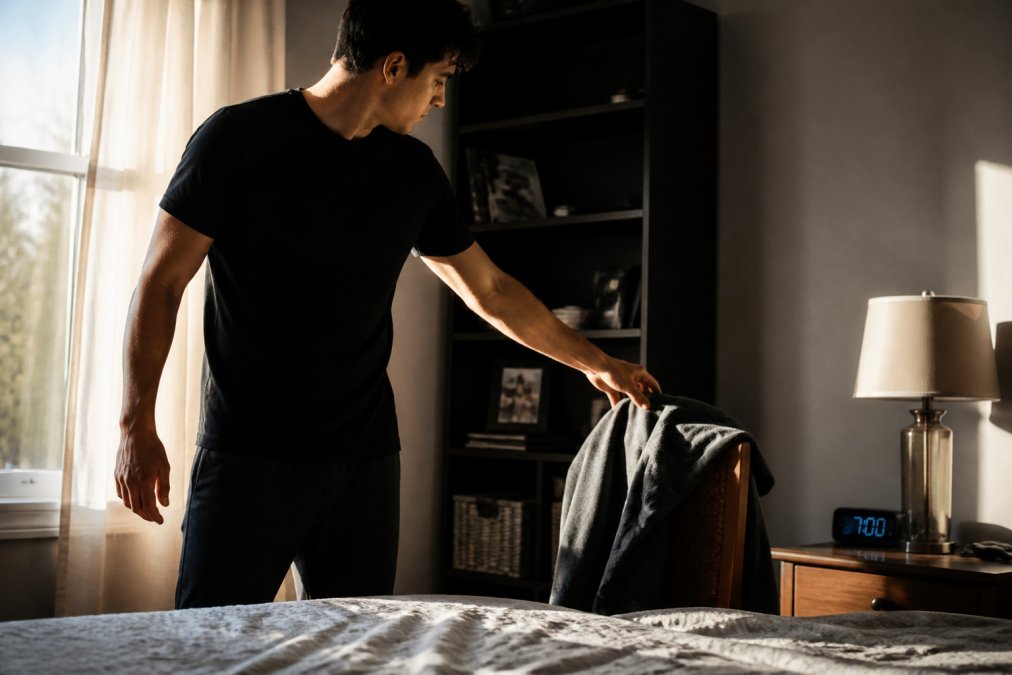
Can a t-shirt wake up your ambition before your phone ever buzzes? That's the promise behind motivational clothing as a mental alarm clock, and at Start4rmStart we've built a brand around the idea that what you put on your back can shape what you put into your day. It rests on a documented psychological effect called enclothed cognition: the symbolic meaning of a garment changes how the wearer thinks and performs.
What Enclothed Cognition Actually Means for Your Morning
Enclothed cognition is the psychological principle that clothing influences the wearer's mental state and behavior based on the symbolic meaning attached to the garment. Researchers Hajo Adam and Adam Galinsky first described it in 2012: participants who wore a lab coat they believed belonged to a doctor performed better on attention tasks than those told it was a painter's coat. The garment didn't change their skills; it changed their self-perception.
That distinction matters for anyone treating a shirt as a mental alarm clock. You aren't relying on magic fabric. You're relying on a cognitive trigger: a garment you've assigned meaning to, worn at a moment when you need your behavior to shift. The Association for Psychological Science overview of enclothed cognition research offers useful background if you want the original study context.
Sensory Anchors: How Fabric and Fit Trigger Mental States
A sensory anchor is a physical sensation you deliberately pair with a mental state. The weight of a heavier cotton blend on your shoulders, the snugness of a comfort-fit collar, the texture against your skin when you sit up in bed: each becomes a behavioral cue your brain associates with starting work.
Material choice is functional here. A 100% combed ring-spun cotton tee feels different from a 50/50 cotton-poly fleece, and that difference registers every time you move. The anchor only works if the sensation is distinct enough to notice and pleasant enough to keep on past 10 a.m.
The Psychology of Morning Triggers: Why Your Brain Needs a Physical Cue
Morning resistance is less a willpower problem than a friction problem. When you wake, the brain is still clearing sleep inertia, the groggy window in which reaction time, working memory, and decision quality sit below baseline. A sound-based alarm interrupts that state but asks nothing of your body, so the path of least resistance is to silence it and slide back. A garment asks something of your body: reaching for a shirt, pulling it over your head, and feeling the fabric settle on your shoulders is a sequence of movements, and movement is what pulls you out of sleep inertia rather than just pausing it.
The second mechanism is cue salience. Habit research finds that cues which are physically present, unavoidable, and tied to an existing routine outperform cues that depend on a fresh decision. A phone notification is a cue you can dismiss with a thumb; a shirt you are already wearing is a cue you cannot dismiss without taking it off. That asymmetry is why apparel survives mornings when motivation does not.
The third mechanism is what psychologists call an implementation intention: a pre-decided if-then plan that removes in-the-moment deliberation. "If I get out of bed, then I put on the cue tee before I touch my phone" is an implementation intention. It works because the decision was made the night before, when you were rested, rather than at 6:45 a.m., when you are not. The American Psychological Association's guidance on habit formation covers how cue-based routines outperform intention-based ones over time, and the practical takeaway is that your cue needs to be physical, unavoidable, and pre-decided.
Behavioral Cues vs. Digital Alarms: What Sticks
| Cue Type | Mechanism | Friction Point | Typical Failure Mode |
|---|---|---|---|
| Phone alarm | Sound interrupts sleep state | Dismissed with one thumb tap | Snooze loop; cue never reaches the body |
| Motivational app | Notification prompts a decision | Requires unlocking, reading, acting | Novelty fades within weeks |
| Fitness tracker | Vibration plus data feedback | Charging, syncing, wrist discomfort | Abandoned when the data stops being interesting |
| Written checklist | Visual prompt on a surface | Requires you to walk to it | Ignored once it becomes furniture |
| Motivational tee | Worn on the body all day | None after the first reach | Only fails if the fit or fabric is unpleasant |
The pattern is consistent: the more interaction a cue demands, the faster people abandon it. The tee wins not because it is more inspiring but because it has the lowest interaction cost.
Why the Cue Has to Be the First Thing You Touch
Order matters. If you check your phone before putting on the cue tee, you've spent the morning's first decision on someone else's priorities, and the tee becomes a second thought rather than a trigger. The cue works when it is the first physical action after your feet hit the floor. Move the phone charger to another room if you have to; the point isn't to demonize the phone but to make sure the shirt gets there first.
Gamifying Your Morning Routine with Motivational Graphic Tees
Gamification turns a routine into a system with wins you can count. Applied to your wardrobe: assign each motivational graphic tee a specific job, then track whether you completed the task you wore it for.
A simple version many people use:
- Pick five tees and write one goal on an index card for each.
- Wear the tee that matches the day's hardest task.
- Mark the card when the task is done.
- Rotate the deck weekly and retire tees that never get worn.
The deck becomes a scoreboard. After a month, you can see which goals you hit and which you avoided, more useful than any app's streak counter, because it reflects real behavior rather than taps on a screen.
What to Look for in the Best Quality Motivational Graphic Tees
The best quality motivational graphic tees combine three things: fabric that survives repeated washing, a fit you'll wear all day, and a design that reads as intentional rather than preachy. Skip any one and the garment stops functioning as a cue, because you'll stop reaching for it.
Start with construction. Look for combed ring-spun cotton or a cotton-poly blend with air-jet yarn, both of which resist pilling and hold their shape. Check for ribbed neck knitting and shoulder-to-shoulder taping, which determine whether the collar sags after ten washes. A tear-away label matters more than it sounds: scratchy tags work against the anchor you're building.
Design is the other half. A phrase you'd be embarrassed to wear in public will never become a daily ritual. The Federal Trade Commission's guidance on textile labeling and care claims is worth a look if you want to understand what care instructions actually guarantee.
Fabric Weight, Fit, and Comfort-Fit Details That Matter
Fabric weight determines how the garment feels and drapes. Lightweight blends suit warm climates and layering; heavier fleece suits cold mornings and carries more physical presence as an anchor. For a daily cue tee, mid-weight combed cotton is the sweet spot.
Fit follows the same logic. A unisex cut that runs true to size gives you a predictable sensation every time you put it on, which makes the anchor reliable. If you prefer a relaxed silhouette, sizing up one still preserves the cue as long as you do it consistently.
Humor, Affirmations, and Inner-Wear Design: Making Motivation Stick
Inner-wear design means building the motivational message into the garment rather than printing it on as an afterthought: where the design sits, how large it reads, and whether the message works as a private reminder, a public statement, or both.
Humor is the most underrated tool here. A shirt with a dry joke about deadline pressure gets worn more often than one with a solemn affirmation, because it doesn't ask you to take yourself too seriously at 6:45 a.m. Humor also survives repetition: a sincere slogan can feel hollow after a month, but a good joke stays funny.
Affirmations still have a place, especially for goal-oriented people who respond to direct language. Keep them specific: "Start anyway" beats "Believe in yourself," because the first tells you what to do and the second just describes a mood.
Routine Integration Guide: Habit Stacking with Your Wardrobe
Most articles on motivational clothing stop at "wear a shirt that inspires you" and never explain how to install the habit, which is why so many people buy the shirt, wear it twice, and forget about it. Here is the structured protocol.
Habit stacking means attaching a new behavior to an existing one so the established routine carries it along. Your wardrobe is already part of your morning sequence, making it an easy anchor point. The protocol below has four phases.
Phase 1: The Two-Week Install (Days 1-14)
Pick exactly one cue tee. Not five. One. The goal during the install phase is repetition, because the cue only becomes automatic after enough reps that your brain stops treating it as a decision. Wear the same shirt every morning for fourteen days, and put it on before you touch your phone. If you miss a day, don't restart the count, just resume the next morning. Missing once is noise; missing three days in a row means the cue is too much friction, so simplify rather than abandon it.
Phase 2: The Anchor Stack (Days 15-30)
Once the shirt-on-first habit feels automatic, attach the next behavior to it. The most reliable stack: shirt on, then say the day's single hardest task out loud, then start it. The spoken task is the second cue, riding on the first. Don't add a third behavior yet, two stacked behaviors is the ceiling for most people in the first month.
Phase 3: The Rotation (Days 31-60)
Now you can introduce variety. Pick three to five tees, each assigned to a task category: deep work, admin, creative, physical, recovery. The rotation matches the cue to the day's demand and keeps it from going stale. A shirt worn forty days straight feels like a uniform; one worn weekly stays distinct enough to register.
Phase 4: The Audit (Day 61 and Monthly After)
At the end of two months, look at which tees you reached for and which stayed folded. Retire the ones you avoided, a cue you avoid is worse than no cue at all, because it teaches you the system doesn't work. Replace retired tees only if a task category needs a cue.
The Daily Sequence
- Lay out tomorrow's cue tee the night before, next to your coffee maker
- Put the tee on immediately after you get out of bed, before checking your phone
- State the day's single hardest task out loud while you're putting it on
- Wear the tee until that task is finished
- Move it to the laundry pile as a physical signal that the task is closed
The night-before step is the one people skip and the one that matters most. Deciding what to wear while half asleep reintroduces the friction you're trying to remove.
Troubleshooting the Protocol
You keep forgetting the shirt. Move it somewhere you cannot miss: on top of your phone, on the bathroom counter, or draped over the coffee maker. The cue has to be in the path of your existing routine, not in a drawer.
You put the shirt on but skip the task. The cue is working; the task is too vague. Narrow it to something you can finish in one sitting. "Work on the report" is not a task. "Write the first three paragraphs of the report" is.
You feel silly talking to yourself. Say it silently. The spoken version is stronger, but a silent version beats none. The point is linking the physical act of dressing to a specific intention.
The shirt feels uncomfortable by noon. The cue is being undermined by a sensory problem. Switch to a mid-weight combed cotton or a cotton-poly blend with a tear-away label, and check the collar construction. A scratchy tag or sagging collar kills the habit faster than any slogan can save it.
Why This Protocol Beats a Productivity App
An app asks you to open it, read it, and act on it, three decisions before the behavior starts. This protocol asks you to do one thing you were already going to do, get dressed, and attaches the intention to it. That's the difference between a cue that survives a bad night's sleep and one deleted in week three.
Common Mistakes to Avoid When Using Clothing as a Motivational Tool
Buying a whole wardrobe at once is the fastest way to kill the habit. Ten new shirts feel like commitment on day one and clutter by week three. Start with two or three pieces, prove the routine holds, then expand.
The second mistake is choosing messages aimed at other people. If you pick a shirt because it looks impressive on Instagram, it won't function as a private trigger. The message has to mean something to you, ideally tied to an obstacle you've actually cleared.
The third is treating the shirt as a substitute for a plan. A cue starts a behavior; it doesn't decide what that behavior should be. Put on the shirt and open your email, and you've spent the cue on nothing.
Conclusion: Your Start Doesn't Define Your Finish
Motivation that depends on how you feel each morning will fail you on the mornings you feel worst. Building a physical cue into your routine removes that dependency, and the research on enclothed cognition gives you a real psychological mechanism rather than a slogan.
Start4rmStart exists for exactly this reason. Our S4S Black Logo tee is built on a unisex fit that runs true to size, with a slightly fitted modern silhouette and a clean design that works as a daily anchor rather than a costume. The S4S Black Logo hoodie adds a 9 oz cotton-poly fleece with air-jet yarn for softness and a removable tag, which matters when you're wearing the same piece every morning. Every garment carries the same message: your start doesn't define your finish.


Get started with Start4rmStart and turn the first thing you put on into the first decision you win.
Frequently Asked Questions
How can clothing influence your daily mindset?
Clothing can serve as a sensory anchor. The psychology of enclothed cognition shows that what you wear carries symbolic meaning that shapes how you think and act. A motivational graphic tee with a resilience-themed message can act as a mental alarm clock, reminding you of your goals every time you catch your reflection. This physical cue triggers a positive trigger in your brain, reinforcing a productivity mindset without relying on willpower alone.
Can wearing motivational apparel improve productivity?
Yes, when used intentionally. For entrepreneurs and freelancers, a shirt like the S4S Black Logo Tee ($25.00) can serve as a behavioral cue to start deep work. Pair it with a morning ritual to create a habit stacking effect that reduces decision fatigue and boosts goal-oriented behavior.
What is the psychological effect of wearing empowering slogans?
Empowering slogans work through positive reinforcement and self-signaling. When you wear a phrase like 'Your start doesn't define your finish,' you're constantly reminded of your self-made identity. This can reduce morning resistance and strengthen self-motivation. Research on enclothed cognition suggests the effect is strongest when the clothing is comfortable and fits well, so you're not distracted by discomfort. Look for unisex apparel with a comfort-fit that feels as good as it looks.
How do I choose the best quality motivational graphic tees?
Focus on fabric weight, fit, and print durability. A 100% combed ring-spun cotton tee (like the District DM108 used in the S4S White Logo, $21.00) offers softness and holds up after washes. Check for a tear-away label and shoulder-to-shoulder taping to prevent irritation. For hoodies, a 9 oz cotton/poly fleece like the S4S Black Logo Hoodie ($28.00) provides warmth without bulk. Always verify the return policy before ordering online.