

Table of Contents
- Why Shoppers Are Moving On From Black Heart Tees
- What Makes a High-Quality Graphic Tee Brand Stand Out
- Best Blank Tees for Streetwear: Fabric Weight and Fit Compared
- Top Black Heart Tees Alternatives in the S4S Lineup
- Fabric Composition and Durability: What to Look For
- Sizing Inclusivity and Fit Comparison
- Ethical Sourcing and DIY Customization Options
- Frequently Asked Questions
Last Updated: September 29, 2026
Why Shoppers Are Moving On From Black Heart Tees
The hunt for best black heart tees alternatives usually starts the same way: a favorite shirt wears thin, the fit stops working, or the print cracks after a few washes. Shoppers want a graphic tee that holds its shape, fits as expected, and says something about who they are.
- Fabric weight. Thin blanks feel flimsy and go see-through fast.
- Fit accuracy. A size chart that doesn't match reality ruins the whole purchase.
- Print and construction quality. Weak necklines and cracked graphics end a shirt's life early.
What Makes a High-Quality Graphic Tee Brand Stand Out
A high-quality graphic tee brand earns trust through fabric specs, honest sizing, and construction details, not just bold artwork. Look past the product photo and read the spec sheet. Here's what separates the good ones:
- Fiber content stated plainly. "100% combed ring-spun cotton" tells you more than "premium cotton."
- Fabric weight in ounces. Anything under about 4 oz feels light; 6-7 oz feels substantial.
- Construction notes. Shoulder-to-shoulder taping, ribbed collars, and tear-away labels signal a brand that thought about wear.
- A real size chart. Measurements in inches for chest, length, and width, not vague "S/M/L" labels.
Best Blank Tees for Streetwear: Fabric Weight and Fit Compared
The best blank tees for streetwear balance fabric weight with a relaxed, structured fit. Too light and the tee drapes like a gym shirt; too heavy without the right cut and you look boxy.
Top Black Heart Tees Alternatives in the S4S Lineup
The strongest alternatives to black heart tees live in the Start4rmStart lineup, where every piece carries the self-made message. Each option below solves a different fit and styling need, with a real fabric spec you can check before you buy.
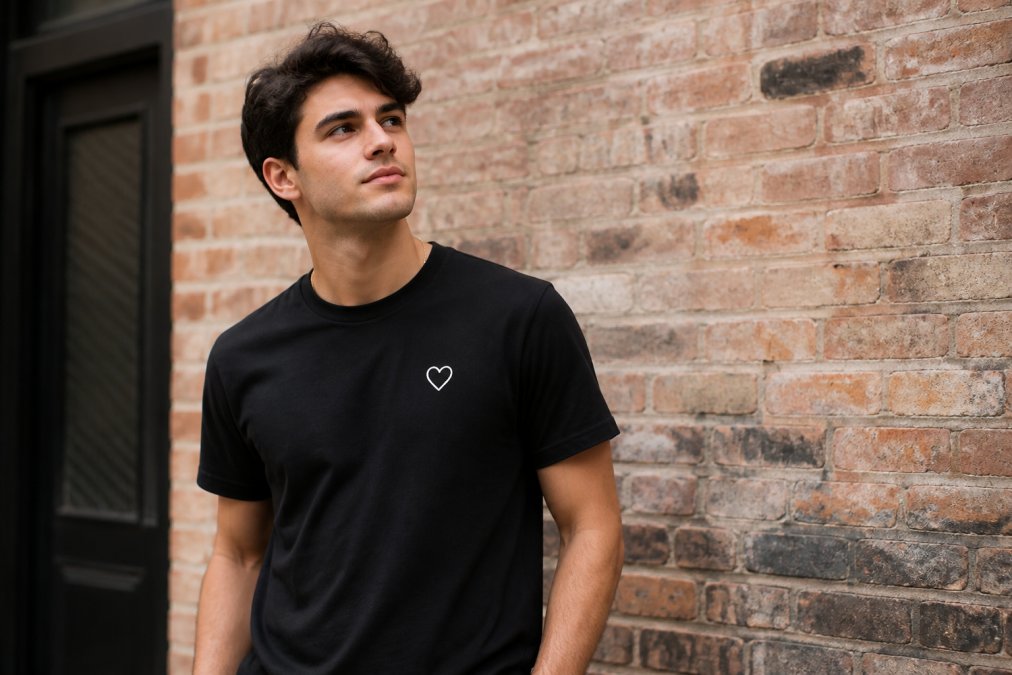
The Everyday Pick: S4S Black Logo ($25)
The S4S Black Logo is the tee to start with: a 4.3 oz blend of 60% combed ring-spun cotton and 40% poly, unisex fit, true to size, slightly fitted silhouette. The tear-away label and 1x1 rib knit neck keep it comfortable all day, one black graphic tee that works with everything.

The Boxy Streetwear Option: S4S Men's Box Tee ($34)
For a relaxed streetwear look, the S4S Men's Box Tee delivers: 100% combed ring-spun cotton at 7 oz, oversized fit, drop shoulder sleeves, and a ribbed reinforced neckline. That heavier weight gives it structure lighter tees lack. Size down for a closer fit.

The Faded Vintage Look: S4S Oversized Faded T-Shirt ($41)
The S4S Oversized Faded T-Shirt is for anyone chasing a worn-in, nostalgic feel without the thrift-store gamble: 100% carded cotton at 7.1 oz, garment-dyed and pre-shrunk, boxy oversized fit, dropped shoulders, wide neck ribbing, and a tear-away label, the layering piece of the group.

The Feminine Cut: S4S Lady's V-Neck ($24)
The S4S Lady's V-Neck brings a fitted women's cut with a modest V-neckline that runs true to size. It's 100% cotton, printed in the United States, with a processing time of one to seven business days. Size up one for a relaxed fit.
| Tee | Price | Fabric Weight | Fit | Best For |
|---|---|---|---|---|
| S4S Black Logo | $25 | 4.3 oz | Unisex, true to size | Everyday wear |
| S4S Men's Box Tee | $34 | 7 oz | Oversized, drop shoulder | Streetwear looks |
| S4S Oversized Faded | $41 | 7.1 oz | Boxy, oversized | Layering and vintage style |
| S4S Lady's V-Neck | $24 | 100% cotton | Women's fitted | A feminine silhouette |
Fabric Composition and Durability: What to Look For
Fabric composition decides how a graphic tee ages, starting at the yarn level.
Ring-Spun vs. Carded vs. Open-End Cotton
Cotton yarn gets made three common ways, and the method changes how the shirt wears:
- Carded cotton is the baseline. Fibers are separated and aligned but short fibers stay in the mix, so the yarn is coarser and pills more readily. It's heavier per yard, which is why carded blanks feel substantial but not especially soft.
- Combed ring-spun cotton strips out short fibers and debris before spinning, producing a smoother, stronger yarn with less surface fuzz. This is the standard for tees that stay soft past the tenth wash.
- Open-end (rotor-spun) cotton is spun differently and tends to be rougher and less durable than ring-spun, though cheaper to produce. If a spec sheet says only "100% cotton" with no spinning method, open-end is the likely default.
Fabric Weight in Ounces
Weight is measured in ounces per square yard (oz/yd²) and best predicts how a tee drapes:
- Under 4 oz: Light and breathable, prone to going sheer in lighter colors.
- 4.3-5 oz: The everyday range. Layers well, feels cool, but won't hold a structured silhouette.
- 6-7 oz: Substantial. Holds shape, resists stretching, gives the boxy streetwear look its structure.
- 7+ oz: Heavyweight. Durable and warm, but can feel stiff until broken in.
Neckline and Construction Details
The neckline is where most tees die first. Look for:
- Shoulder-to-shoulder taping, a strip of fabric across the back of the neck that stops shoulder seams from stretching.
- 1x1 rib knit collar, a ribbed collar with roughly equal knit and purl stitches that snaps back into shape after washing. A self-fabric collar stretches out fast.
- Double-needle hems, two parallel stitch lines at the sleeve and bottom hem that resist unraveling.
- Tear-away labels, printed or perforated labels that remove cleanly, avoiding the scratch factor that drives people to cut out sewn-in tags and damage the collar.
Print Method and Longevity
The print is usually the first thing to fail on a graphic tee, and the method matters more than the design:
- Plastisol screen printing lays a thick ink layer on top of the fabric. It's durable and colorfast but can crack if the shirt is stretched or dried on high heat.
- Water-based and discharge printing dyes the fabric rather than coating it, so the print feels soft and fades gradually instead of cracking. It's less opaque on dark garments, which is why discharge printing is common on black tees.
- Heat transfers and DTG (direct-to-garment) can look sharp but tend to peel at the edges after repeated washing, especially on high-polyester blends.
How to Read a Spec Sheet
When a brand lists "100% combed ring-spun cotton, 6.0 oz, 1x1 rib collar, shoulder-to-shoulder taping," you have enough information to predict how the shirt will wear. When a brand lists only "premium cotton tee," you're buying on faith. The American Society for Testing and Materials textile standards set the testing methods brands use to measure fabric weight and durability, which is why two shirts labeled the same weight can still feel different.
Sizing Inclusivity and Fit Comparison
Sizing is where most online tee purchases go wrong, and it's the easiest problem to avoid. Start4rmStart publishes chest and length measurements in inches for every style, XS through 2XL, so you can match the chart to a shirt you already own. Here's how the fits compare:
- S4S Black Logo (unisex): Runs true to size, size up for a relaxed look.
- S4S Men's Box Tee: Oversized by design; size down for a standard fit.
- S4S Oversized Faded: Boxy and roomy; true to its oversized label.
- S4S Lady's V-Neck: Women's fitted cut, true to size, size up for relaxed.
Ethical Sourcing and DIY Customization Options
Most of the SERP treats alternative graphic tees as a pure aesthetics purchase. That's a gap. Where a tee is made, who made it, and what happens to it after you're done with it increasingly drive why shoppers pick one brand over another.
What Ethical Sourcing Actually Means for Apparel
"Ethical" gets used loosely. In practice, it comes down to four checkable things:
- Country-of-origin disclosure. The Federal Trade Commission's textile and wool rules require apparel to carry a country-of-origin label. That label tells you where the garment was assembled, not where the fabric was woven or the cotton was grown, a distinction most brands don't volunteer.
- Factory transparency. Some brands publish the names and locations of their cut-and-sew facilities; others list only a country. The more specific the disclosure, the easier to verify.
- Fiber sourcing. Organic cotton, recycled polyester, and responsibly sourced viscose carry different supply-chain footprints. Certifications like GOTS (Global Organic Textile Standard) and OEKO-TEX Standard 100 are third-party verified, not self-declared.
- Domestic vs. imported printing. A shirt can be cut and sewn overseas and printed domestically, or vice versa. Where the print happens affects lead time and labor conditions.
Questions Worth Asking Any Brand
If a brand's sourcing page is vague, these questions cut through it:
- Which countries are the blanks cut and sewn in?
- Are any third-party certifications held (GOTS, OEKO-TEX, Fair Trade)?
- Is the print done in-house or outsourced, and where?
- Does the brand publish a supplier list?
DIY Customization Techniques That Actually Work
Customizing a good blank is the cheapest way to get a one-of-one graphic tee and sidesteps the fast-fashion cycle. A few techniques hold up well on 100% cotton and cotton-poly blanks:
- Fabric paint and stencils. Best on 100% cotton. Cut a stencil from freezer paper, iron it shiny-side down, and apply fabric paint in thin coats. Heat-set with an iron after curing. Works on cotton-poly but adheres less durably.
- Embroidery patches. Iron-on patches bond to most fabrics but peel after repeated washing. Stitching them down with a few anchor points makes them permanent.
- Distressing and fading. Sandpaper, a pumice stone, or a diluted bleach spray (roughly 1 part bleach to 4 parts water) creates a worn-in grunge look. Bleach weakens cotton fibers, so distress sparingly and rinse thoroughly.
- Tie-dye and reverse dye. Reverse dye (bleaching a black tee, then over-dyeing) is the standard method for the faded vintage look. It works best on 100% cotton; high-poly blends resist dye and bleach unevenly.
- Screen printing at a local shop. For a small run of custom graphic tees, a local screen printer can usually handle orders of 12-24 pieces. Ask about plastisol vs. water-based ink, water-based gives a softer hand on dark garments.
The Trade-Off Nobody Mentions
DIY customization and ethical sourcing pull in opposite directions on one point: durability. A distressed, bleached, or heavily painted tee has a shorter lifespan than a plain one, because every technique that adds character also weakens fibers or adds a layer that can crack. If longevity is the goal, keep customization light and lean on embroidery or screen printing rather than bleach.
Frequently Asked Questions
Who makes the highest quality graphic tees?
Brands that prioritize fabric weight, ring-spun cotton, and reinforced construction tend to produce the most durable graphic tees. Look for details like shoulder-to-shoulder taping, ribbed necklines, and fabric weights between 4.2 and 7.1 oz/yd². Start4rmStart uses combed ring-spun cotton blends across its line, with options like the S4S Men's Box Tee featuring 100% combed ring-spun cotton at 7 oz/yd² and a reinforced neckline for long-term wear.
What are the best blank tees for streetwear?
The best blank tees for streetwear balance fabric weight, fit, and durability. Heavier fabrics (6-7 oz/yd²) hold their shape and drape well for layering. Boxy or oversized fits with drop shoulders work best for the streetwear silhouette. The S4S Oversized Faded T-Shirt at 7.1 oz/yd² and the S4S Men's Box Tee at 7 oz/yd² both offer the relaxed, structured look streetwear styling calls for, with pre-shrunk and garment-dyed options available.
Are there sustainable alternatives to mass-produced gothic clothing?
Yes. Look for brands that use sustainably produced fabrics and hold certifications like WRAP or FLA participation. The S4S Cropped T-Shirt uses a Bella + Canvas blank that is sustainably produced. Choosing higher-quality garments also reduces the need for frequent replacements, which lowers overall consumption compared to fast-fashion alternatives that wear out quickly.
How do I style alternative graphic tees for a modern look?
Start with a well-fitting black or faded tee as your base. Layer it under an open flannel, denim jacket, or oversized blazer for contrast. Tuck the front into high-waisted pants or leave it loose over slim joggers. For a darker aesthetic, pair with distressed denim and boots. The S4S Oversized Faded T-Shirt works well for layering because its boxy cut and wide neck ribbing accommodate additional pieces without bunching.
What is the best brand of black T-shirts?
The best black T-shirt brand depends on your priorities: fabric weight, fit, and print durability. Start4rmStart offers several black tee options ranging from $21 to $41, including the S4S Black Logo at $25 with a 60% combed ring-spun cotton and 40% poly blend, and the S4S Embroidered Unisex Tee at $30 with 100% combed ring-spun cotton. Each option uses different fabric weights and fits, so you can match the shirt to how you plan to wear it.
Replacing a worn-out favorite shouldn't mean settling for a thinner, worse-fitting shirt. Start4rmStart builds tees for people who've turned nothing into something, with real fabric specs and fits that hold up. The S4S Black Logo, the Men's Box Tee, the Oversized Faded Tee, and the Lady's V-Neck each solve a different styling need while carrying the same message: your start doesn't define your finish. Get started with Start4rmStart and find the graphic tee that fits your story.