

Table of Contents
- Resilience Company vs Rise Above: The Core Difference
- What Resilience Company Actually Sells
- Where Rise Above Fits In
- Motivational Clothing Brands for Entrepreneurs: What to Compare
- Hustle Culture Clothing Alternatives That Skip the Cringe
- Where Start4rmStart Wins on Fabric and Fit
- Corporate Resilience vs Personal Resilience: Why It Matters for Your Wardrobe
- The Dark Side of Forced Resilience
- Frequently Asked Questions
Last Updated: September 12, 2026
Resilience Company vs Rise Above: The Core Difference
If you've typed "resilience company vs rise above" into a search bar, you've probably noticed something strange: half the results are about t-shirts, and the other half are about industrial biotech. That's the keyword ambiguity problem, and it's worth untangling before you spend money. A resilience company builds products, systems, or services around the concept of recovery and durability; Rise Above is a motivational apparel label that sells the idea as a wearable statement. This guide from Start4rmStart breaks down what each one actually offers, where motivational clothing brands for entrepreneurs fit into the picture, and how to pick pieces that hold up after fifty washes instead of fifty days.
Here's the honest version: most people searching this term want one of two things. They either want a company that helps organizations withstand disruption, or they want a shirt that reminds them why they started. Below, we'll cover both definitions, then focus on the apparel side where the buying decision actually gets made.
What Resilience Company Actually Sells
The resilience company category splits into two very different businesses, and confusing them wastes your time.
In the corporate world, a resilience company is a consultancy or platform that helps organizations plan for disruption. Think crisis management, operational excellence, supply chain redundancy, strategic planning under pressure. These firms sell frameworks and retainers, not merchandise.
In the apparel world, a resilience company sells motivational clothing. The products are graphic tees, hoodies, and accessories stamped with phrases about adversity, determination, and bouncing forward. The value proposition is emotional: you wear your mindset.
Neither definition is wrong. But a corporate resilience vendor and a motivational apparel brand solve completely different problems, and no comparison table can bridge that gap.
Where Rise Above Fits In
Rise Above is a motivational apparel label built around themes of overcoming obstacles and self-empowerment. Its designs lean into short, punchy phrases about rising, climbing, and refusing to stay down.
That puts it in the same lane as most motivational clothing brands for entrepreneurs: the message is the product. Fabric and fit are secondary, which is exactly where the category gets shaky.
What most guides miss is that this lane has a ceiling. When the slogan is doing all the work, the garment underneath it is usually a cheap blank with a heat-pressed transfer. You're paying for the phrase, not the construction. That's fine if the phrase is all you want. It's a problem if you expect the shirt to survive a year of weekly wear.
The distinction matters more than the branding suggests. A resilience company sells durability as a concept. Very few of them sell durable clothing.
Motivational Clothing Brands for Entrepreneurs: What to Compare
When you compare motivational clothing brands for entrepreneurs, the criteria that actually matter aren't the slogans. They're the specs you'd use for any basic garment.
Here's the shortlist, in priority order:
- Fabric weight and blend. Look for a stated weight in ounces and a cotton-poly ratio. A 9 oz, 50/50 fleece behaves very differently from a thin 5 oz cotton tee.
- Print method. Direct-to-garment (DTG) and screen print age differently. DTG can fade faster on dark fabric if the pretreatment is poor.
- Fit and sizing accuracy. A brand that publishes a real chest and body-length chart is telling you it has measured its own product.
- Message restraint. The best pieces let the phrase do half the work and the design do the rest. Preachy loses its punch by week two.
- Return policy. Apparel bought online without a clear return window is a gamble.
| What to Check | Why It Matters | Red Flag |
|---|---|---|
| Fabric weight | Predicts warmth and durability | No weight listed |
| Cotton-poly blend | Affects shrinkage and softness | "Premium cotton" with no ratio |
| Print method | Determines fade rate | Vague "high-quality print" |
| Size chart | Shows real measurements | "True to size" only |
| Return window | Protects your money | No policy published |
That table is the whole buying decision in five rows. Everything else is marketing.
Hustle Culture Clothing Alternatives That Skip the Cringe
Hustle culture clothing alternatives work when they trade the shouty slogan for something quieter. The genre got crowded with "RISE AND GRIND" chest prints, and a lot of buyers have tired of wearing a billboard. The fix isn't avoiding motivational apparel. It's choosing pieces where the message rewards a second look instead of demanding attention on the first one.
A Wearability Test You Can Run in 30 Seconds
Most guides stop at "pick something subtle." That's not a test, it's a vibe. Here's a repeatable one. Score each candidate piece from 0 to 2 on five criteria, for a maximum of 10 points. Anything scoring 7 or higher tends to survive the first month of real wear; anything at 4 or below usually becomes a drawer shirt.
| Criterion | 0 points | 1 point | 2 points |
|---|---|---|---|
| Message type | Direct command ("HUSTLE HARDER") | Mixed slogan | Identity statement ("Self-Made") |
| Logo size | Full-chest graphic | Medium chest print | Small chest or sleeve mark |
| Colorway flexibility | Neon or multi-color | One accent color | Neutral or monochrome |
| Context range | Only works at events | Works at casual settings | Works at a grocery store |
| Phrase longevity | Trend slang | General motivation | Timeless identity language |
That table is the whole buying decision in five rows. Everything else is marketing.
Why Identity Language Outlasts Commands
A phrase that describes who you are ("self-made," "still standing") ages differently than a phrase that issues an order ("never quit," "rise and grind"). Commands imply you haven't arrived yet, so the shirt becomes a daily reminder of the gap. Identity statements assume the decision is already made, so the shirt becomes a confirmation. Most buyers find the second type stays in rotation far longer, which matters when a single hoodie costs $28 to $61.
The Cost-Per-Wear Math Nobody Runs
A $28 hoodie worn twice a month for a year costs about $1.17 per wear. The same hoodie worn three times and then retired costs about $9.33 per wear. The slogan isn't the variable here, the wearability is. Before checkout, ask how many times you'd realistically reach for the piece in the next 90 days. If the honest answer is under five, the message isn't strong enough to justify the price, no matter how good the phrase reads on a product page.
What to Avoid Entirely
- Trend slang. Phrases tied to a specific year read as dated within two seasons.
- Stacked slogans. Two messages on one garment split the attention and weaken both.
- Irony without clarity. Sarcastic motivational prints confuse the audience and rarely get worn in public.
- Event-only pieces. If the shirt only makes sense at a conference, it's merchandise, not a wardrobe staple.
Where Start4rmStart Wins on Fabric and Fit
Start4rmStart builds apparel for people whose start didn't dictate their finish, and the construction backs the message. The S4S Black Logo Hoodie and S4S White Logo Hoodie use a 9 oz, 50/50 cotton-poly fleece with air-jet yarn for softness and a two-ply hood, which is a heavier build than the heat-pressed blanks common in this category. Both run from S to 4XL, and the brand publishes an actual chest and body-length chart rather than a vague "true to size" note.

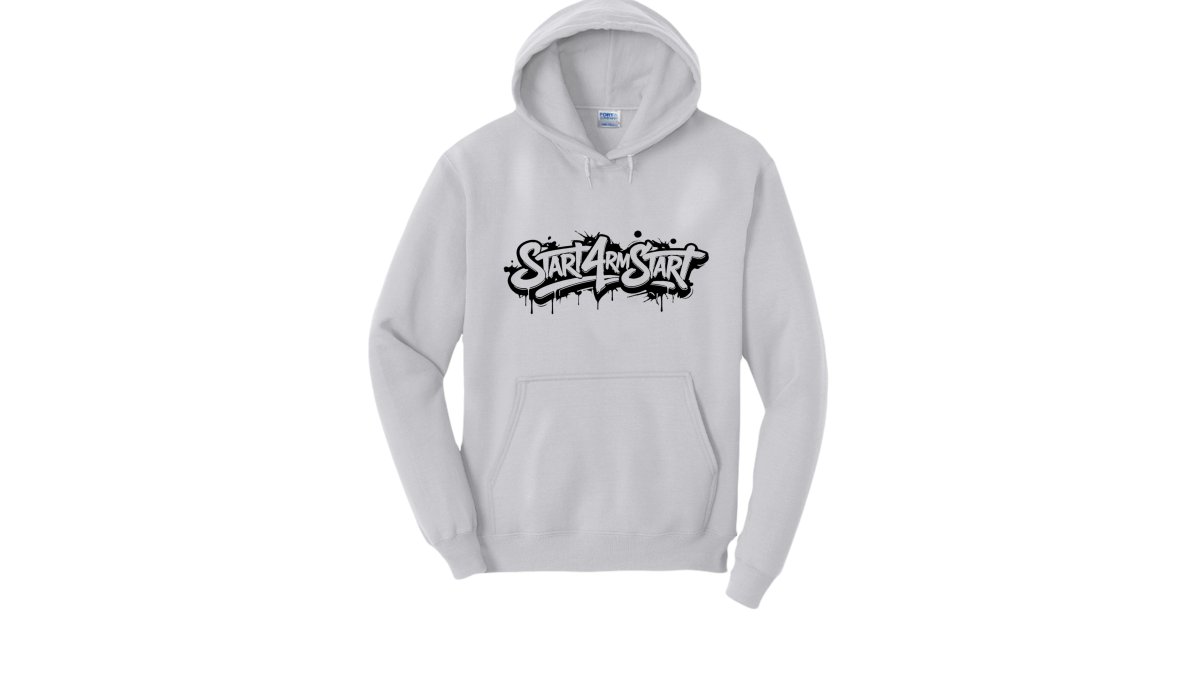
For warmer days or a lighter layer, the S4S Unisex Hoodie options run from a 55% cotton, 45% polyester 260gsm build up to an 80% ring-spun cotton Comfort Colors piece. The print method is DTG, produced in the United States, with a 1-5 business day processing window.
Prices are straightforward: $28 for the S4S Black Logo Hoodie, $35 for the white version, $38 to $42 for the Zuni and Gildan unisex options, and $61.48 for the Comfort Colors build. No subscription, no bundle upsell.
The design approach is where the brand separates itself. The logo is small and the messaging is understated, which means the piece reads as clothing first and a statement second. That's the opposite of how most motivational labels build their products.
Corporate Resilience vs Personal Resilience: Why It Matters for Your Wardrobe
Corporate resilience and personal resilience get treated as the same trait, and they aren't. Corporate resilience is a system property: redundancy, documented process, cross-trained staff, and the ability to absorb a shock without losing output. Personal resilience is a psychological property: coping mechanisms, emotional intelligence, adaptability, and the capacity to recover from a setback without losing direction.
Why does that distinction matter when you're buying a hoodie? Because the two forms of resilience require different reminders. Corporate resilience is reinforced by process. Personal resilience is reinforced by identity. A shirt that says "self-made" is doing identity work, not process work. It's a cue, not a system.
A Simple Scorecard for Each Type
Most content in this space stays qualitative. A short scorecard makes the distinction usable. Rate each statement from 1 (not true) to 5 (consistently true).
Corporate resilience indicators:
- Critical processes are documented and can run without a single key person.
- At least two people can perform each essential role.
- There is a tested plan for supply, staffing, or system disruption.
- Recovery time from a major shock is measured, not assumed.
- Post-incident reviews produce changes, not just reports.
Personal resilience indicators:
- You can name your default response to a setback before it happens.
- You have at least one person you'd call within 24 hours of a serious problem.
- You separate the event from your identity ("I failed at this" vs "I am a failure").
- You can rest without treating rest as failure.
- You've changed direction on a goal when the evidence justified it.
A total under 15 on either list is a signal, not a verdict. The point is that the two lists don't overlap. A company can score 25 on the corporate list while its founder scores 10 on the personal one, and that gap is where most burnout stories start.
Where the Two Types Collide
The collision point is leadership. A founder wearing a "never quit" hoodie while running a company with no documented processes is applying personal-resilience language to a corporate-resilience problem. The shirt can't fix the missing redundancy plan, and the missing plan will eventually exhaust the person wearing the shirt. That's the honest limit of the category. A garment can remind you of a decision you already made. It can't make the decision for you, and it can't substitute for the systems that keep a business standing.
The Dark Side of Forced Resilience
Forced resilience is the pressure to keep going when the right move is to stop, rest, or change direction. It shows up in workplaces that frame burnout as a personal failing and in hustle culture that treats exhaustion as proof of commitment. The pattern is common enough that most practitioners recognize it: resilience pushed past a certain point stops being a strength and starts being a coping mechanism for a bad situation. Wearing a shirt that says "never quit" while running on four hours of sleep isn't motivation. It's denial with a logo.
So here's the line worth drawing. Buy motivational apparel if it reinforces a direction you've already chosen. Skip it if you're using it to talk yourself into a situation you should be leaving. The category is fine. The misuse isn't.
The Dark Side of Forced Resilience
Forced resilience is the pressure to keep going when the right move is to stop, rest, or change direction. It shows up in workplaces that frame burnout as a personal failing and in hustle culture that treats exhaustion as proof of commitment.
The pattern is common enough that most practitioners recognize it: resilience pushed past a certain point stops being a strength and starts being a coping mechanism for a bad situation. Wearing a shirt that says "never quit" while running on four hours of sleep isn't motivation. It's denial with a logo.
So here's the line worth drawing. Buy motivational apparel if it reinforces a direction you've already chosen. Skip it if you're using it to talk yourself into a situation you should be leaving. The category is fine. The misuse isn't.
Frequently Asked Questions
What is the difference between Resilience Company and Rise Above?
Some motivational apparel brands focus on mental health and personal development messaging, often tied to broader wellness themes, while others lean into aspirational, achievement-driven slogans. Many do not typically publish fabric weight, cotton-polyester blends, or detailed size charts. That lack of transparency can make it hard to judge quality before buying. Start4rmStart publishes exact fabric specs, like 50/50 cotton-poly fleece at 9 oz, so you know what you are paying for.
How do I choose a motivational clothing brand that aligns with my self-made story?
Start with three checks: fabric transparency, design subtlety, and price per wear. A hoodie that lists its material blend and weight will outlast one with vague specs. Look for designs that work in casual and semi-professional settings, not just gym wear. Then compare cost per wear. Consider the cost per wear. A durable hoodie that you wear frequently offers better value than a cheaper tee that quickly loses its quality.
Are there clothing brands that focus on self-made success stories?
Yes, and the category is growing. The best motivational clothing brands for entrepreneurs build their identity around origin stories, not just slogans. Start4rmStart, for example, centers its designs on the idea that your start does not define your finish. That framing resonates with founders, freelancers, and professionals who built something from nothing. Look for brands that publish product specs, not just aspirational copy.
What should I look for in hustle culture clothing alternatives?
Hustle culture clothing alternatives should feel wearable beyond the gym or a startup pitch. Check the fabric weight first: 9 oz fleece holds shape better than thin 6 oz blends. Look at the print method. Consider the print method. Finally, read the size chart carefully. Brands that publish chest and body length measurements, like Start4rmStart does, save you a return.
Does wearing resilience-themed apparel actually change your mindset?
Apparel works as a repeated cue, similar to how a uniform signals role and readiness. The effect depends on personal association, not the garment itself. If a hoodie reminds you of a goal or a past obstacle you cleared, it can reinforce that identity each time you wear it. The key is choosing designs that feel authentic to your story, not generic slogans that could belong to anyone. Fit and comfort matter too, because you will actually wear it.
Resilience is easier to wear when the clothing underneath the message is actually built to last. If you're tired of slogans on flimsy blanks, Start4rmStart makes apparel for the self-made with a 9 oz cotton-poly fleece build, a published size chart, and understated designs that work outside a motivational context. Browse the S4S Black Logo Hoodie, the S4S White Logo Hoodie, and the full unisex range at Start4rmStart and wear something that holds up as well as you do.